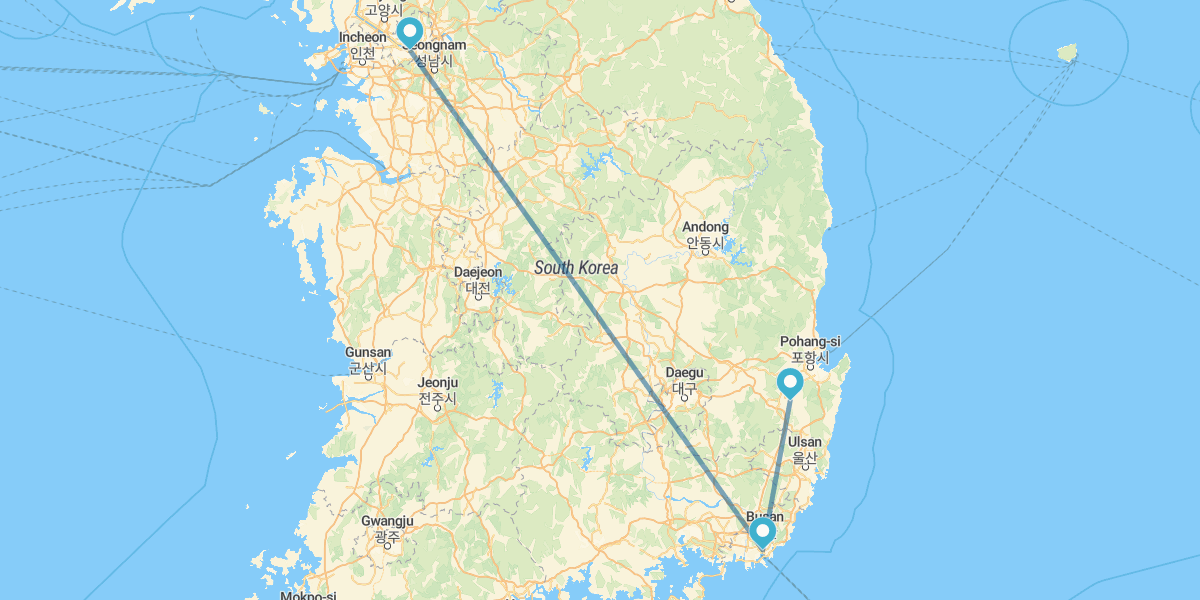


Let yourself be captivated by South Korea, a fascinating country in the Far East that, despite its roots reaching back to the dawn of humanity, is today one of the most advanced and avant‑garde nations on the planet.
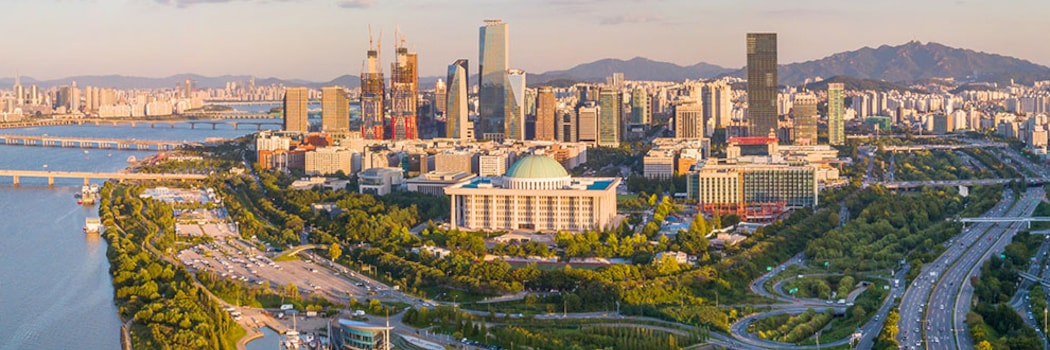
A clear example of this is Seoul, its magnificent capital, where the modernity and tradition of South Korea can be appreciated in many of its corners. Thanks to its efficient metro system, visitors can move comfortably throughout the city and visit, among other attractions, the tsunami‑shaped City Hall and, opposite it, Deoksugung Palace; the wonderful palaces of the Changdeokgung complex, designated a UNESCO World Heritage Site; Gyeongbokgung Palace, with 600 years of history behind it; and the Lotte World Tower, an impressive 550‑metre‑tall building. The district of Myeongdong (which means “bright tunnel”) is the country’s largest shopping and entertainment area, while Bukchon Hanok Village is the traditional historic neighbourhood filled with small houses. A must‑see is the War Memorial, a museum that reviews the conflicts that have taken place in the region throughout history, such as the various Chinese and Japanese invasions and the Korean War of the last century.
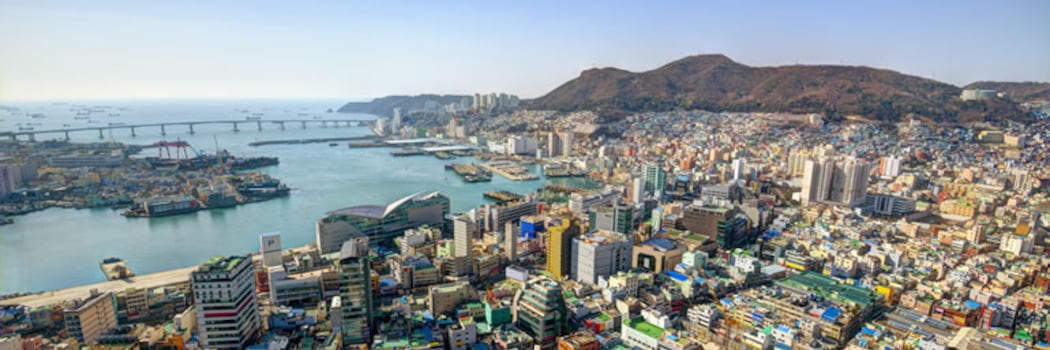
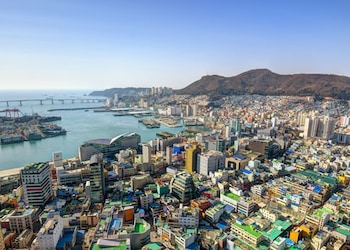
Busan is South Korea’s ultra‑modern second city. There you will find the United Nations Memorial, which includes a cemetery where people of diverse origins are buried. In the Doosan Haeundae complex, visitors can admire its skyscrapers rising over 300 metres as well as its marina. You should not miss the country’s largest fish market, located next to Nampo Port, nor Yongdusan Park, where a vast 120‑metre pagoda stands.
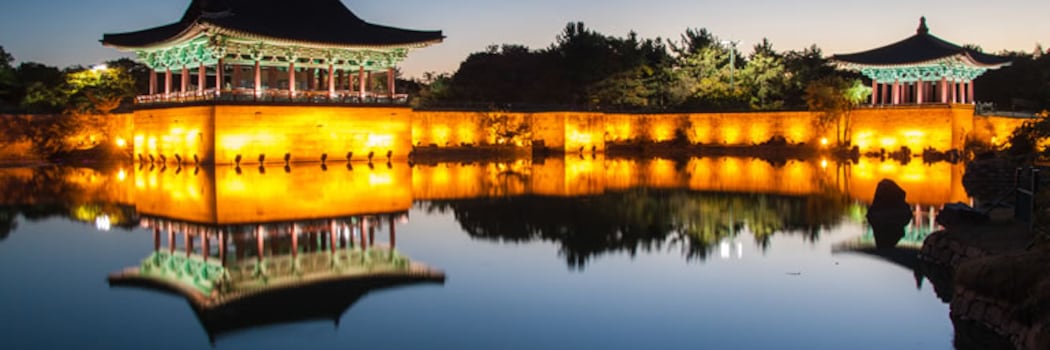
Gyeongju was the country’s capital for 992 years, when the city was known as Sorabol and more than half of present‑day South Korea belonged to the Kingdom of Silla. Gyeongju boasts an impressive monumental and archaeological legacy that has earned it the nickname “the museum without walls.” It is no coincidence that the city is home to three UNESCO World Heritage Sites: Seokguram, the artificial Buddhist grotto carved in the 8th century, and the Buddhist temple of Bulguksa, a masterpiece of the Silla kingdom’s golden age; Yangdong, a traditional Korean village from the Choson dynasty (1392–1897); and the historic areas of Gyeongju, overflowing with tombs, palaces, pagodas, and statues from the Silla period. In total, the city has 31 national treasures and hosts the fantastic Gyeongju National Museum, which houses more than 15,000 artefacts dating back to prehistoric times. A true journey into South Korea’s millennia‑old past.