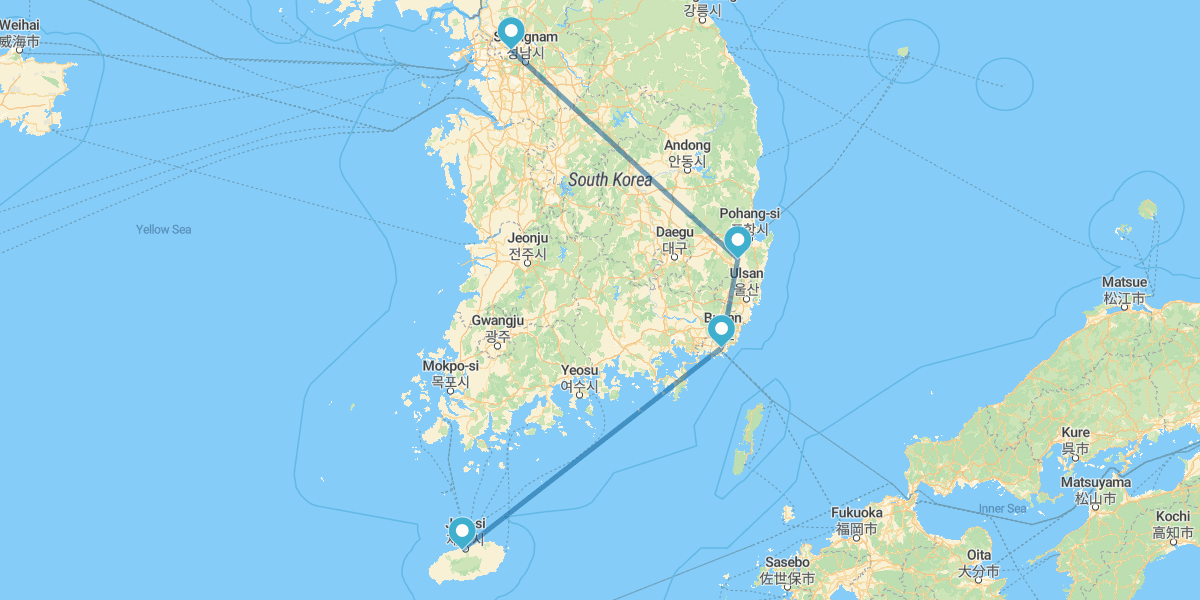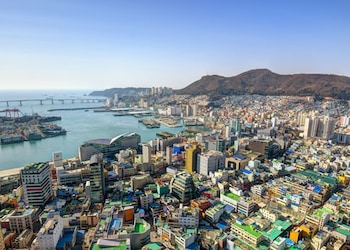


Be captivated by South Korea, a fascinating Far Eastern nation that, despite its ancient roots stretching back to the dawn of civilisation, is now one of the most advanced and forward-thinking countries in the world.
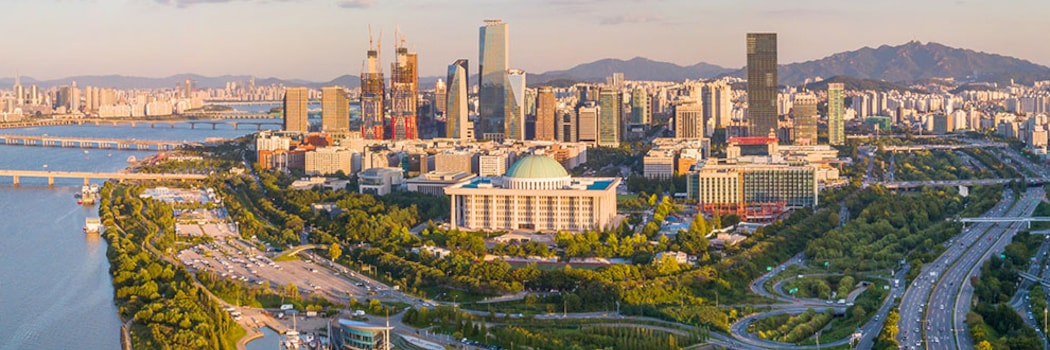
A perfect example is Seoul, its magnificent capital, where modernity and tradition coexist in remarkable harmony. Thanks to its efficient underground network, visitors can easily explore the city and discover attractions such as the wave-inspired City Hall and the Deoksugung Palace opposite it; the magnificent palaces of Changdeokgung, a UNESCO World Heritage Site; Gyeongbokgung Palace, with over 600 years of history; and the impressive 550-metre-high Lotte World Tower. Myeongdong is the country's leading shopping and entertainment district, while Bukchon Hanok Village preserves the charm of traditional Korean architecture. The War Memorial of Korea is also a must-see, offering a fascinating overview of the conflicts that have shaped the region's history.
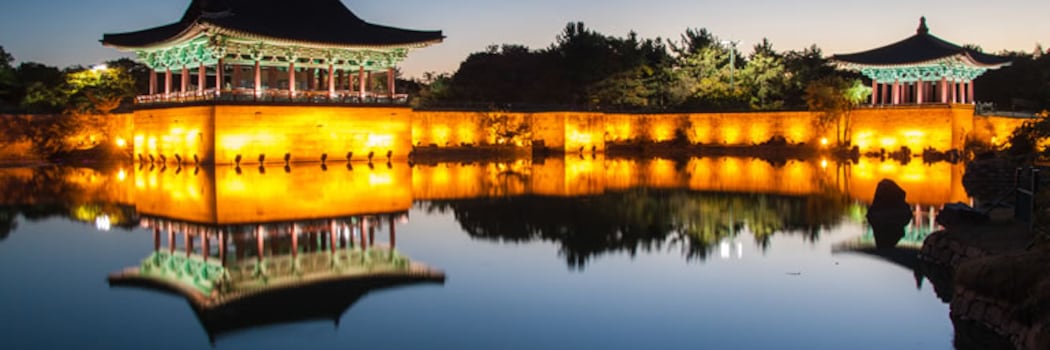
Gyeongju served as the nation's capital for 992 years, when it was known as Sorabol and more than half of the Korean Peninsula belonged to the Kingdom of Silla. Today, its extraordinary archaeological and cultural heritage has earned it the nickname “the museum without walls”. The city is home to three UNESCO World Heritage sites: Seokguram Grotto and Bulguksa Temple; Yangdong Folk Village; and the Historic Areas of Gyeongju, rich in royal tombs, palaces, pagodas and sculptures from the Silla period. With 31 national treasures and the outstanding Gyeongju National Museum, housing more than 15,000 artefacts dating back to prehistoric times, the city offers a remarkable journey into Korea's distant past.
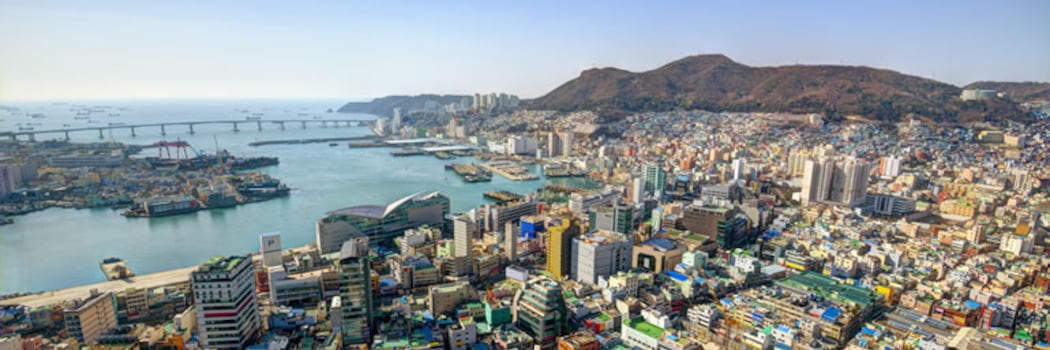
Busan is South Korea's vibrant and ultra-modern second city. Highlights include the United Nations Memorial Cemetery, the Doosan Haeundae complex with its skyscrapers rising more than 300 metres above the skyline and its marina, the country's largest fish market near Nampo Port, and Yongdusan Park with its impressive 120-metre tower.
Located in the Korea Strait, Jeju Island is a true natural paradise, recognised in 2011 as one of the New Seven Wonders of Nature. This volcanic island is dominated by Mount Halla, a 1,950-metre volcano and the highest peak in the country. Its relative isolation has helped preserve a unique culture, traditionally matriarchal in character, where ancestors are honoured through the famous stone grandfathers, known as harubang, carved from volcanic lava. A truly unforgettable experience.